Start here
Why is my plant dying?
Almost certainly one of five things. Here is how to work out which one, in about a minute, without buying anything.
A dying houseplant is rarely a mystery and almost never a curse. It is usually one ordinary thing, and most of the time that thing is the direct result of somebody caring very hard in the wrong direction. The good news in that sentence is the whole point of this page: if you caused it, you can stop causing it.
Start with your hands, not with a search bar.
Four checks, thirty seconds
- Stick a finger in the soil. Second knuckle deep, not the surface. The surface is always dry. Wet, damp or dry down there?
- Pick the pot up. Heavy for its size means the mix is full of water. Suspiciously light means bone dry.
- Look at the bottom of the pot. Is there a drainage hole? Is it standing in a saucer or a cachepot with water in it? Roots poking out?
- Turn a leaf over. Phone torch on the undersides and the joints where leaf meets stem. That is where every pest lives.
Do all four before you decide anything. Most of what follows settles itself the moment you know whether the mix is wet or dry at knuckle depth — and the single most expensive mistake in this whole hobby is watering a plant that was already too wet, because the symptoms of both look identical from above.
The five that do nearly all the killing
-
Too much water. The kind one.
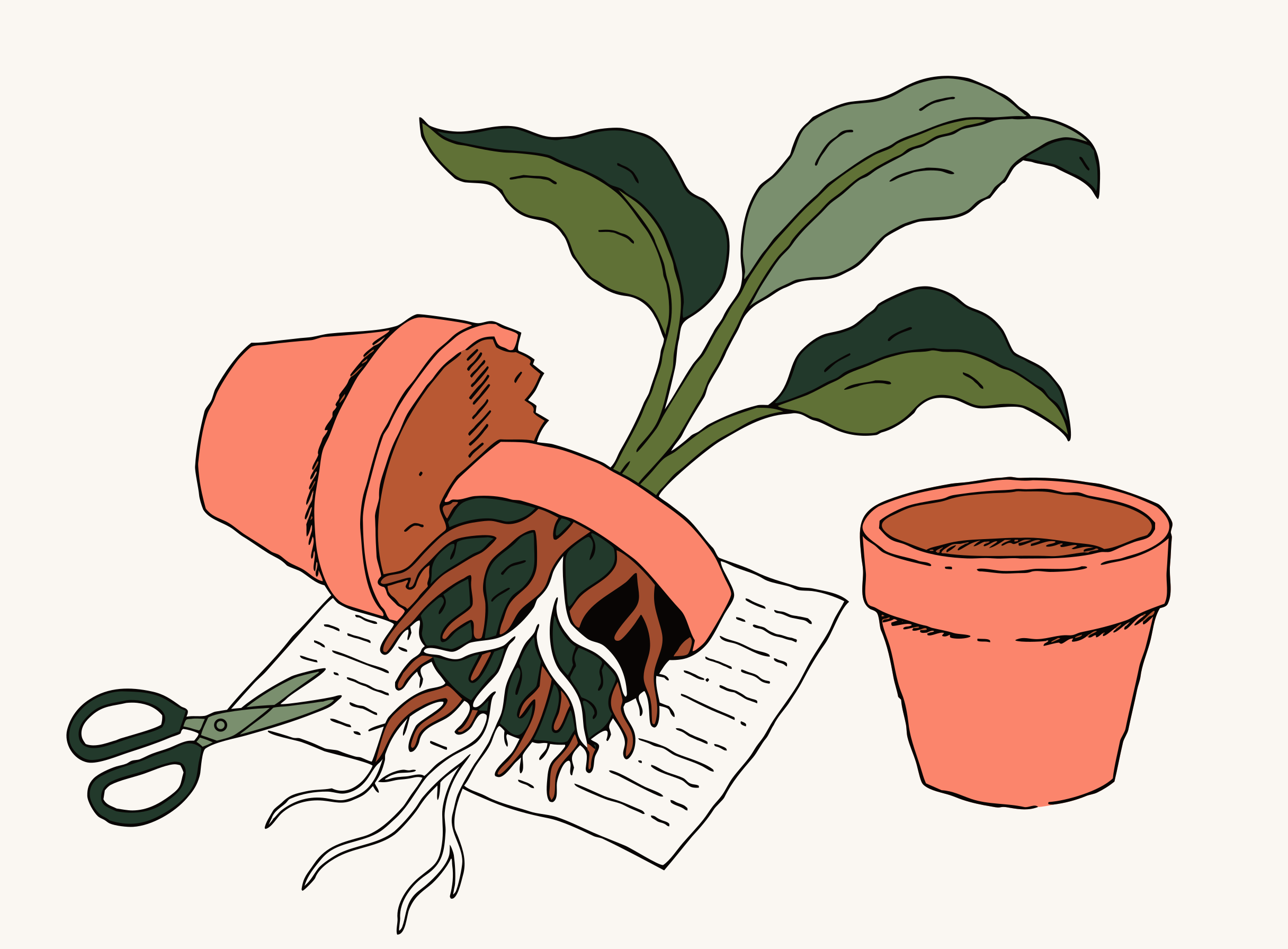
The commonest killer by a distance, and it never looks like drowning. It looks like soft yellow leaves low down the plant, or a stem that has gone soft at the soil line, or a succulent turning translucent and mushy. Roots need air as much as they need water. Soil that is still damp when you next go to water it is soil with no air in it, and the plant starts shedding its oldest leaves to cope. If the pot also smells sour, you are past watering habits and into root rot, which is the one situation where unpotting it today is the right move.
-
Not enough water. The honest one.
Limp, papery, pot suspiciously light, mix shrunk away from the sides. This is the one that looks dramatic and is nearly always fine: a drooping pothos can be upright again by evening. Water it thoroughly, until it runs out of the bottom, and then stop watering by the calendar — the same plant wants a completely different schedule in February and in July.
-
Not enough light. The slow one.
Nothing dramatic happens. It just stops. Long bare stems, small pale new leaves, variegation fading back to plain green, and no flowers no matter what you feed it. Light is the ingredient, not food, and a spot a metre back from the window delivers a fraction of what the sill does even though your eyes swear otherwise. Sometimes the pale new growth is nothing to worry about at all — a ZZ plant is meant to come up light green.
-
Something living on it.
Turn a leaf over and put a phone torch on the undersides and the joints. That is where everything lives. Little black flies that get worse after watering are breeding in damp surface soil, so swatting them achieves nothing and drying the top of the mix ends it. Fine webbing in the joints with pale speckling on top is the one to move fast on: isolate the plant in a different room the same day.
-
You changed something. Or the air did.
Brown confined to the very tips is usually dry air or minerals rather than disease — the tip is the furthest point from the roots, so it runs out first. And a plant that started sulking a fortnight after you moved it or potted it on is not dying, it is paying for the disturbance with its oldest leaves. Leave it where it is, water it less rather than more, and do not feed it until you see new growth.
Three things not to do while you work it out
Do not water it for reassurance. You have a finger and a pot to lift now. Use them. Watering because you feel bad is how the commonest killer on this page gets its numbers.
Do not feed a struggling plant. A plant in trouble is not hungry. Damaged roots cannot use fertiliser, and the salts sit in the mix and burn what is left. When you do feed again, follow the official feeding chart rather than a number you half remember.
Do not repot it just because it looks unhappy. Repotting costs weeks of recovery it may not have. Root rot is the exception, and root rot smells like it.
Then what?
If you can see the symptom but cannot place it, the sixty-second triage walks you from what you see to the likely culprit and two or three things to do today. If none of it fits, ask the club — it is free, the answer is written by AI and safety-checked before it posts, usually within about fifteen minutes, and it gets published so the next gardener searching the same panicked sentence at eleven at night finds it.
And if you are reading this a week too late: the Plant Coroner will tell you what happened, name it in mock Latin, and hand you one true thing to do differently. Grief is allowed to be funny.
Your plant isn’t dead yet.
Most of them are not. Find out which one you have got.
Diagnose it in 60 seconds